Add your own title and intro here (Change this under Settings -> General -> Tagline)

Category: Weekly Reflections (Page 1 of 2)

This is the category to apply to your Weekly Reflection posts from the course.

Final Reflection for Term – collaboration

Reflecting on this term, one theme stands out prominently in my mind: collaboration. Throughout the course, I’ve come to appreciate the importance and joy that come from working together with others. This, I’ve realized, is at the heart of teaching.

The Group Inquiry project was a particularly enlightening experience for me. It opened my eyes to the reality of collaboration in the field of education. In my opinion, teaching is inherently collaborative, and this project reflected that truth. It was fascinating to observe how four different individuals navigated the inquiry process on the same topic but in such different ways. We were able to delve deeply into the topic of screen use in K-3 classrooms in a comprehensive and enlightening manner because we explored so many aspects of this issue. It showed me that in our future roles as teachers, we’ll often find ourselves working closely with colleagues, sharing ideas, and collectively problem-solving to provide the best education for our students.

The discussions we had throughout the course, especially those with guest speakers like Simone Littledale from VISII, further reinforced the significance of collaboration. Hearing about her experiences and insights emphasized how much we can learn from one another when we come together with a common goal.

Andrew served as a bridge, reinforcing this theme of collaboration by fostering connections within the cohort and with the technology and innovation community of BC. I greatly appreciate all the teachings woven throughout the term that will guide us to be the best teachers we can be.

Inspirational videos on collaboration:

And this is supposed to be Andrew as our bridge that builds connections.
Week 11 – Class Reflection on Gamification

Lara Kehler’s discussion on Engaging Students with Coding & Gamification was inspiring. Lara’s passion for incorporating gaming elements into learning was contagious, and it got me thinking about how we can make education more fun and interactive.

I decided to play around with Scratch after listening to Lara’s session. I had to watch a few YouTube videos, but eventually I got the hang of it. Seeing how kids can easily create digital stories and games with it was inspiring. I spent some time tinkering around with it myself, and I could totally envision how kids would love it.

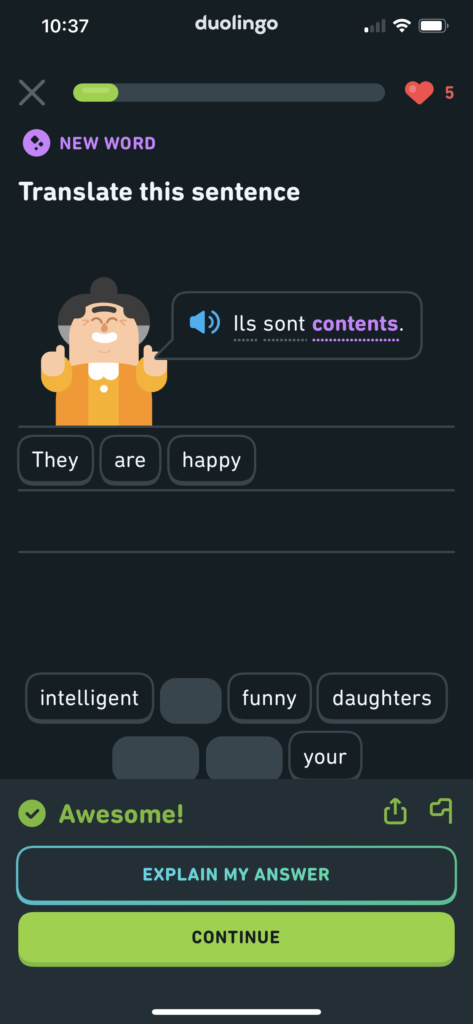
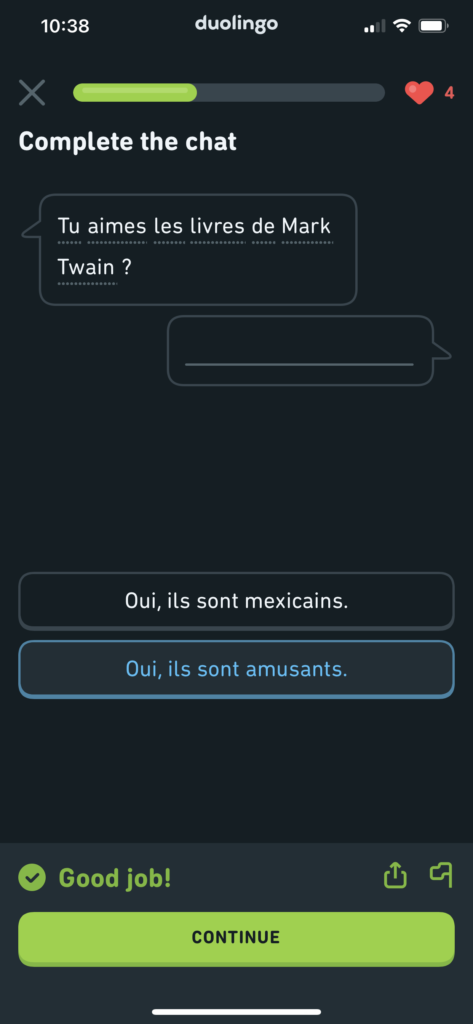
Also this week I logged back into my Duolingo app and seeing how they’ve gamified language learning reinforced the idea for me that gamification is crucial for learning. It’s amazing how adding game-like elements can make the learning experience so much more engaging. I now have began to switch my scrolling with a bit of playing on Duo.

The real lightbulb moment came when I combined these insights and thought about gamifying my yoga classes. I decided to introduce a game during one of my sessions, sort of a yoga version of Simon Says. I would say “move your right hand” and the student just had to place that limb somewhere new on the mat. It not only got some students out of their comfort zones but also helped others to sink deeper into their practice. The atmosphere afterward was so relaxed, with tensions melted away. I think this is something that games can do, make the environment for learning more relaxes.

An AI generated image of me trying to recreate the yoga game I played in class.. haha

This whole experience made me realize the power of gamification in transforming any learning environment. It’s not just about making things fun; it’s about making them more accessible, interactive, and ultimately, more effective. I’m excited to explore more ways to incorporate gamification into my teaching in the future.

Week 10 – Ed(dy)Camp

I thoroughly enjoyed this activity and look forward to participating in more events like this in the future, and perhaps even organizing similar events myself.

The two talks I attended focused on unstructured play and inquiry. I was eager to join these discussions to gain insights from others on these topics.

It was fascinating to hear everyone’s perspectives and comfort levels regarding unstructured play. During the conversation, I shared a story with my group that I’d like to recount here.

One afternoon, while teaching at Oak and Orca, the students began discussing the “mat game.” When I inquired about it, they simply replied, “Just wait and you will see.” So, during physical education class, we ventured out onto the field with five or six large mats. As a newcomer to the school, I couldn’t believe what I witnessed. There was a group of 15 students, ranging in age from 4 to 17. Two kids at a time would hop onto a mat and attempt to through the other one off. Initially, it seemed chaotic and even a bit alarming, as some students would aggressively try to throw others off the mat, resulting in tears. However, whenever someone got hurt, they all paused to check in with each other and inquire if they wanted to continue. Later, my mentor explained how they were learning about consent, understanding what a “yes” and “no” feel like, through playing this game.

Initially, I struggled to see the benefits of this game. However, after discussing it with my mentor and the students, I gained a full understanding and appreciation for it.

However It was not as funny as this wrestling…

I find the concept of Ed Camp intriguing because it allows you to hear stories from others and gain deeper insights into topics you may not be familiar with.

Week 9 – Strategies for Online Teaching and Assessment

This week, I gained valuable insights from both the lecture and Meghan. I hadn’t fully grasped the various types of modalities that could be used in the classroom; my perception was limited to face-to-face and online formats. However I now realize there is so much more. For example hybrid learning, blended learning, and online learning are all different.

I was curious what current teachers like and why they like it so I asked a few of my friends and here is some of their feedback:

Kartik – Inquiry Teacher at Oak and Orca Bioregional School.
– “Face to face is always best. I believe that their needs to be a strong connection and relationship between student and teacher. When learning is online it can be more challenging to build rapport with your students. That being said, online learning can allow you to access students who wouldn’t normally be able to learn from a teacher. For example, I teach some child on the gulf islands where they do not have access to an inquiry school.”

What Kartik said really resonated with me. In my personal experience I found teaching to the students in the brick and mortar school allowed for strong connections to be built and I could feel my students trusted me with their learning by them taking risks and asking lots of questions. I also had a few online students and I mostly had to rely on parents to be the liaison for the students learning. So it was difficult for me to really know how much the student was taking away from the lessons that I was assigning.

My friend Aachal is a teacher for University of San Diego and she values the online learning because it allows her to live here with her husband while teaching to students in the US. “If we didn’t have the option for online learning, then I would be out of a job! Online learning makes education more accessible!”

Overall, there isn’t a one-size-fits-all approach to learning! Its remarkable that we’re at a point where learning can take on such diverse forms to truly cater to the unique needs of each student.

Week 8 – Innovative & Inclusive Educational Practices

This week I was inspired by Simone Littledale from VISII on her discussion on individualized learning through inquiry and the school. While she was speaking all I could think about was Oak and Orca Bioregional School. There are many similarities between the two schools. Some of the major ones being the inquiry style of learning, 1:1 check ins, quite spaces, body breaks, and the overall schedule.

These schools are spaces for kiddos who do not succeed in the traditional schooling system. Some needing more challenge, and some just need way less stimulation.

Days after the conversation with Simon, some of my peers and I raised questions about the accessibility of attending an inquiry school given its high price point. Other questions emerged regarding how to identify an inquiry program suitable for adoption by the school. This inspired me to contemplate ways in which the public school classroom could foster inclusion, curiosity, and connection through inquiry-based learning. Here is a list of methods through which a public school teacher might cultivate an atmosphere of inquiry in their classroom::

Project based learning
Listening to the students and really hearing them!
Being super clear about expectations and the BC curriculum and creating unit plans together
Emphasize critical thinking (Encouraging questioning)
Cultivating belonging in the classroom

And this is from Chat GPT asking the question:
“How can a public school teacher create an atmosphere of inquiry in their classroom?”

  • Encourage Questions: Foster an environment where students feel comfortable asking questions about the subject matter. Reinforce the idea that there are no ‘silly’ questions.
  • Promote Curiosity: Stimulate curiosity by presenting intriguing problems or topics that prompt students to want to know more.
  • Provide Resources: Offer access to a variety of resources such as books, articles, videos, and experiments that allow students to explore topics in-depth.
  • Emphasize Critical Thinking: Encourage students to analyze, evaluate, and synthesize information rather than simply memorizing facts. Teach them to question assumptions and think critically about the material.
  • Facilitate Discussions: Arrange discussions where students can express their opinions, share their perspectives, and engage in respectful debates. Encourage active listening and constructive feedback.
  • Hands-on Activities: Incorporate hands-on activities, experiments, and projects that allow students to actively engage with the material and discover concepts for themselves.
  • Support Investigation: Provide opportunities for students to conduct their own research and investigations. Guide them through the process of formulating research questions, designing experiments, and analyzing results.
  • Model Inquiry: Demonstrate curiosity and a passion for learning yourself. Show enthusiasm for exploring new ideas and encourage students to follow your example.
  • Encourage Collaboration: Foster a collaborative learning environment where students can work together to solve problems, share insights, and learn from each other’s perspectives.
  • Provide Feedback: Offer constructive feedback that helps students deepen their understanding and refine their thinking. Encourage them to reflect on their learning process and identify areas for improvement.
  • Celebrate Curiosity: Recognize and celebrate curiosity and inquiry-driven learning by highlighting student achievements and showcasing their work.


Overall, I think it is our responsibility to hold space in the classroom for inquiry to thrive.

Week 6 Reflections – AI

For this weekly reflection I would like to dive deeper into the topic of AI, specifically in education.

Over the last few months I have gone back and forth with using AI, specifically Chat GPT. As a future teacher who plans to cultivate curiosity within each student I think Chat GPT is so wonderful; especially for inquiry. Its a great place to start and it teaches us to ask questions and then to fine tune those questions, which is a crucial skill when learning through inquiry.

While using this in the classroom, I would simply preface with what AI is and how it works. Hopefully with this front loading, my future students will use it as the tool that it is to guide our learning. I like to also do a google search and find a credible resource to double check the information from Chat GPT. Again, this double checking sparks and cultivates curiosity.

I personally used Chat GPT a few times this week. I spend about 3-5 hours a week studying yoga and ayurveda, and this week I used it to summarize my learning from a book called Yoga and Ayurveda by Dr. David Frawley

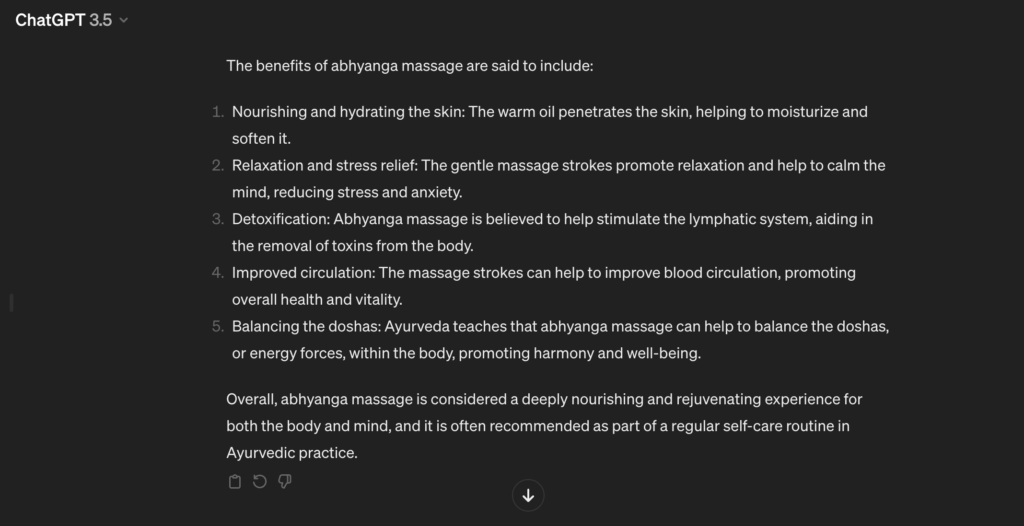
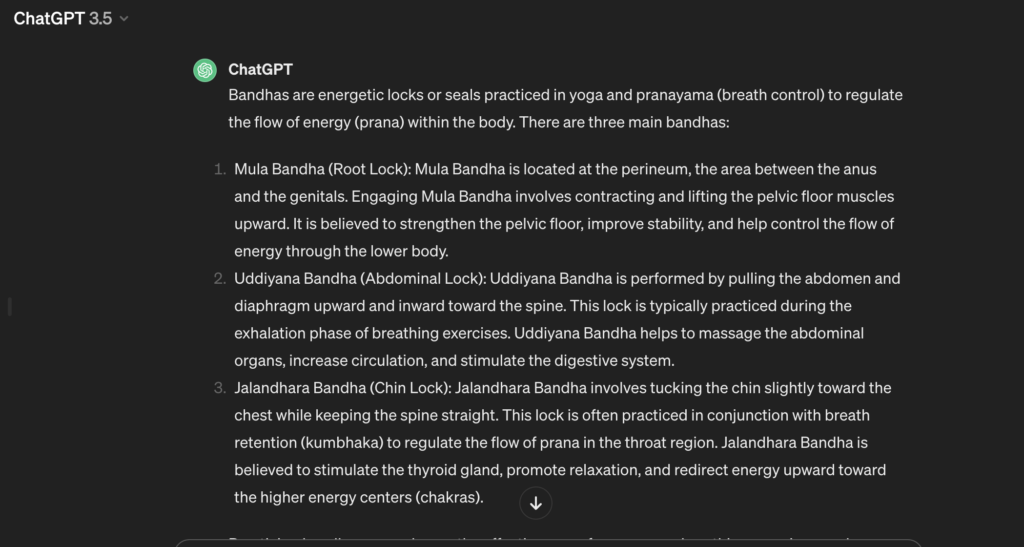
I asked Chat GPT to give me some benefits from an Abhyanga and it aligned with the information from the book. I also was looking deeper into the Bandhas and it guided my learning and sparked new learning. This is one of the reasons why I like it so much is because it can guide us to new questions.

Here is a screenshot from my brief conversation with Chat:

Week 5 Reflection / Notion

For this week’s blog post, I’ll be reflecting on my experience with Notion.

While playing around with this software I noticed how intuitive it was. Within moments of navigating the website, I found myself being able to locate things like the note-taking and project planning sections. I also thought it was easy to toggle back and forth between documents.

I also found a few YouTube videos that helped me dive into Notion a bit deeper. Here is one of the videos I liked:

Currently, I’m trying to figure out how to manage two different accounts under the same email. Since my email is linked to both my personal and work accounts, I am note sure if my colleagues at work have access to documents I add. I am guessing if I opt for the payment plan, this would resolve this issue.

Personally, I am a fan of the Notes app on my iPhone, and I saw a few similarities between the two. While Notes is great for quick jottings, Notion seems to be much more versatile. It has many more features that would allow me to organizes my thoughts/notes with ease. It feels like it’s a combination of Google Docs and iPhone Notes. At least this is how I would use it.

Another thing I like a lot about Notion is the easily customizable templates. I also like the ability to add images easily to the docs. This process seems to always take me to much time when working on Google Docs.

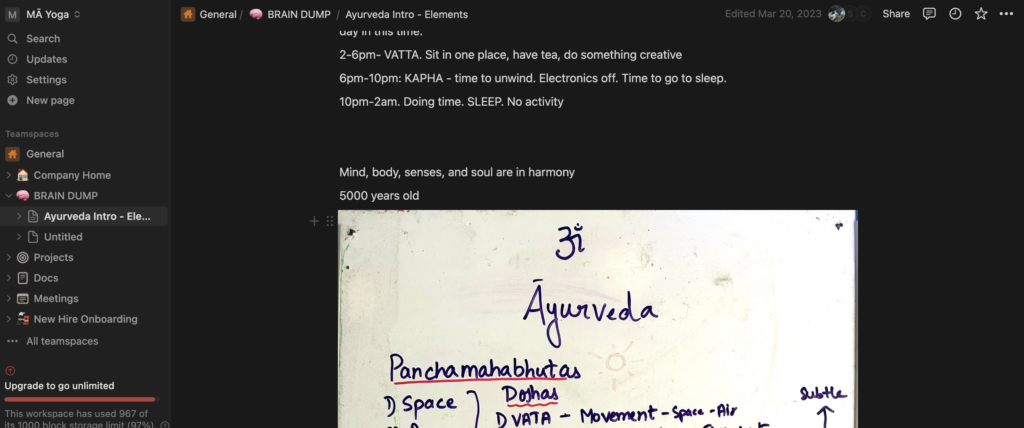
At one of my workplaces, we just began to use Notion as a place to organize our thoughts and communicate to co workers. During the Ayurvedic classes, for instance, I found it incredibly convenient to snap pictures of whiteboard notes and simply add them onto the doc. 

Overall, I could see how useful this would be while being a student. This could be a place where one could store all their class notes and collaborate with classmates.

Here is screenshot of my screen showing how I added an image of the white board into the notes on Ayurveda.

Weekly Reflection #4

This week, I enjoyed Jesse Miller’s discussion on Digital Citizenship & Online Safety. He challenged my beliefs when discussing tech in the classroom. I tend to think of ideas on how to reduce screen time and rarely seek out information or research from the other side. So, Jesse shedding light on research that shows the importance of tech in the classroom was very interesting. However, I did not agree with his definition of addiction. He stated that kids are only addicted when they would commit a crime to give in to the addiction. I believe kids can be addicted to tech without the need to commit a crime. For me, it’s a simple habit that we train the mind to do. I look at it like this: whatever you are doing in the moment, the body and mind will want to do more of it.

When I start teaching on practicum, I will switch my social media accounts to private. I mostly post about yoga or nature connection, but it will be nice to keep those worlds separate.

Week 3 – Class Reflection

I would like to use this weeks blog post to discuss and reflect on Live It Earth.

My initial reaction to the platform was that it was just increasing screen time for kids. That initial assumption was shut down quite early with the conversation with Dave Russell-Loewen. He described how LiveIt.Earth is more of a tool and a resource belt to give to teachers to to make their time with their kiddos more meaningful and impactful.

I appreciate how this platform can save teachers a lot of time. Most of my friends are currently teachers and this is something that I hear over and over and over again. That there is very little time so finding resources that actual feel good and are connected to the big ideas in our curriculum is amazing!

The focus on cross-curricular competencies,  the support with UDL, and the connection to Indigenous ways of learning make this platform stand out over other resource websites.

As a future teacher with a land-based teaching background, I found the resources to be creative and diverse. After going through some of the lesson ideas, it feels that most lessons follow the themes of place-based and guided inquiry.

I specifically like the challenges that are given with each resource. These can all be easily adapted to meet the level of where the student is at.

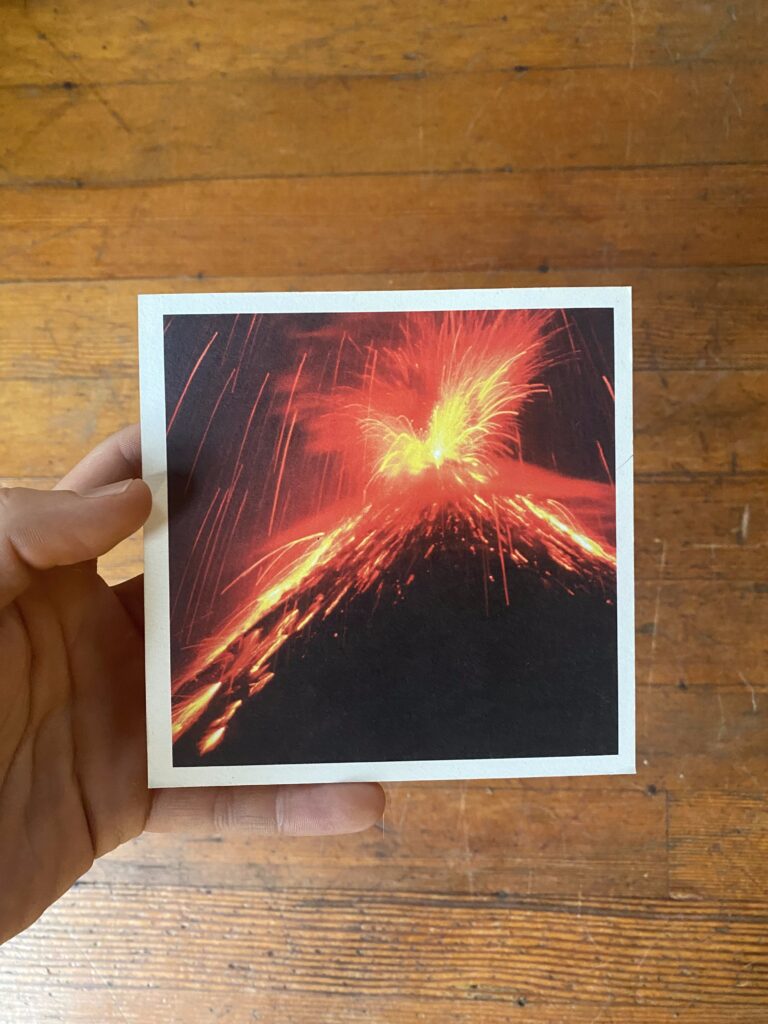
I would love to use the resource on Volcanoes if I were teaching science and the rock cycle. Igneous rock coming from Volcanoes being one of step in the rock cycle. 

https://app.liveit.earth/en/programs/earth-science-volcanoes

I showed this website to my partner who is an 8th grade teacher and we dove in deeper trying to find resources that he could use for his classroom. He noted how cross curricular the resources were.

I for sure see myself using these resources as a future teacher. 

Weekly Reflections #2

Today’s class was insightful and offered more clarity to the structure of the course. We began with a talk about Ed Tools. I appreciated the section with Trevor Mackenzie. I am also very interested in inquiry and it’s how I naturally teach. I taught at Oak and Orca Bioregional School here in Victoria for a few years where we focus on student centred learning and inquiry style of learning. I liked Trevors picture of the pool related to inquiry. I actually never really thought about it in levels, but it makes sense!

The Most Likely To Succeed film was interesting and also inspiring. I think when teaching inquiry, you have to first cultivate curiosity and teach kids how to question. When kiddos would first start at Oak and Orca they all struggled quite a bit because they were used to having their learning dumped onto them rather than finding it themselves.

I was shocked to learn about how much data big tech companies have on students across Canada. I’m curious if this data will continue to pile up or does it get archived or deleted after so many years of just sitting in “storage”? Kev Yew offered so much insight into what goes on behind the scenes in the ed tech world. I appreciated his suggestions on what to do as new teachers, simply just read the policy so we are aware!

Overall, this class gave me more information on inquiry, helped me to solidify my inquiry project, and opened up my eyes to the amount of work it takes to protect student information and the steps needed to do so.

« Older posts

© 2026 River Eddy

Theme by Anders NorenUp ↑